
Roller Replacement in China Grove
Roller Replacement for China Grove Garage Doors
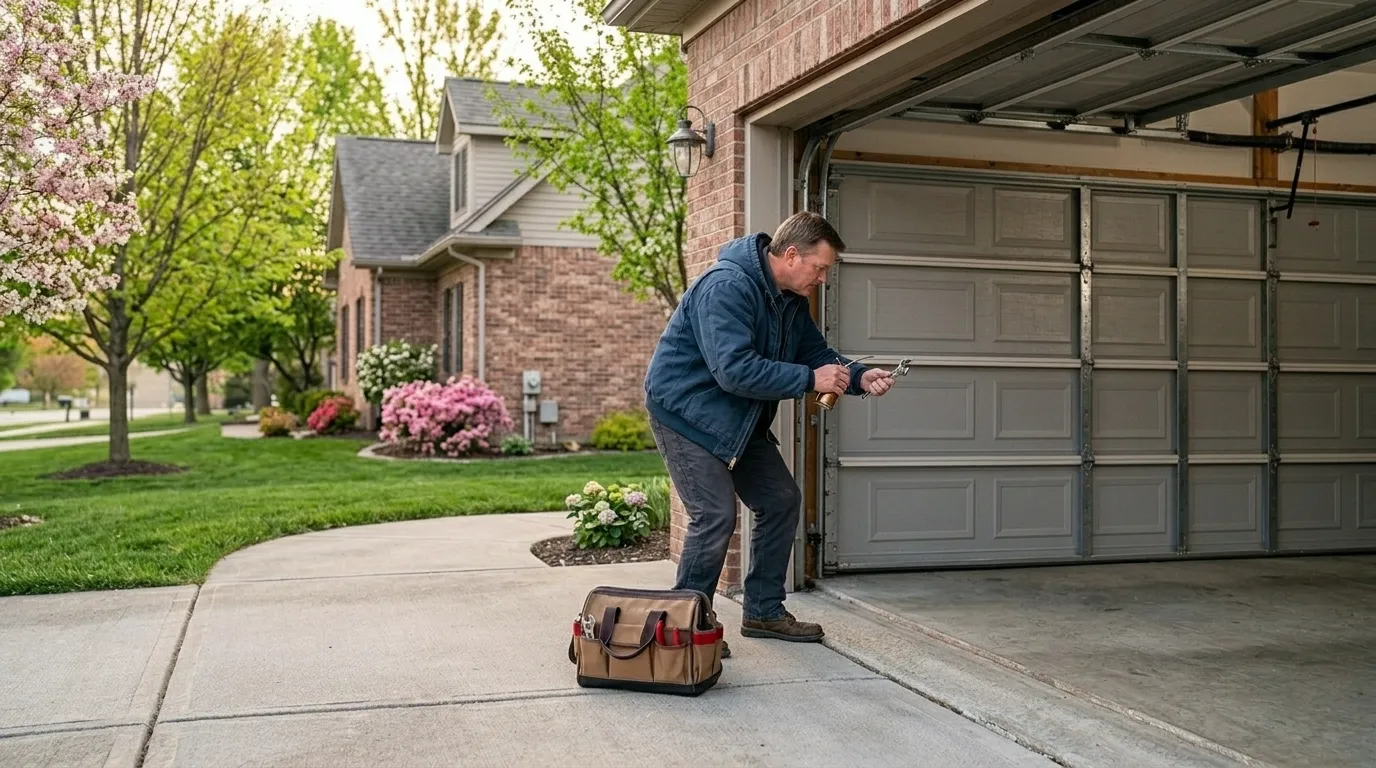
China Grove homes date mostly to 1988, and steel rollers on original tracks wear fast in our heat. We drive out from San Antonio to fix it - here's what that job looks like.
- Licensed & Insured
- Same-Area Service Calls
- Upfront Pricing
What Happens When You Call
-
1
Call or Request a Quote
Tell us what the door is doing and roughly how old the house is - that alone points us toward the likely part before a truck leaves.
-
2
On-Site Diagnosis
A tech checks the spring, cables, tracks, and opener in person and tells you plainly what is actually wrong.
-
3
Straight Price, No Surprises
You get a number before any work starts. It covers parts and labor, nothing added after the fact.
-
4
Fixed the Same Visit
Most repairs are done in one trip. If a part needs sourcing, we tell you that upfront instead of guessing.
What Causes It Around Here
China Grove sits about 12 miles out from San Antonio, and that drive shapes how we run a roller job here: we're not swinging by on the way to something else, so when we come out we bring what a roller job actually needs and try to finish it in one trip. Most houses in this part of the service area were built around 1988, which lines up with a stretch of construction across the metro that ran from the mid-1950s through the early 2000s. Doors from that era usually came with steel rollers on steel tracks, no nylon, no sealed bearings.
Thirty-plus years of Texas heat does two things to that setup: it dries out whatever lubricant was on the roller stem, and it lets the track brackets work loose from thermal expansion and contraction, day after day, summer after summer. The result is a roller that's flat-spotted or chipped, riding rough in a track that's no longer quite straight. You hear it before you see it - a grinding or popping on the way up.
In a climate band with severe heat exposure, that wear timeline runs faster here than in milder parts of the country.
Doing It Yourself
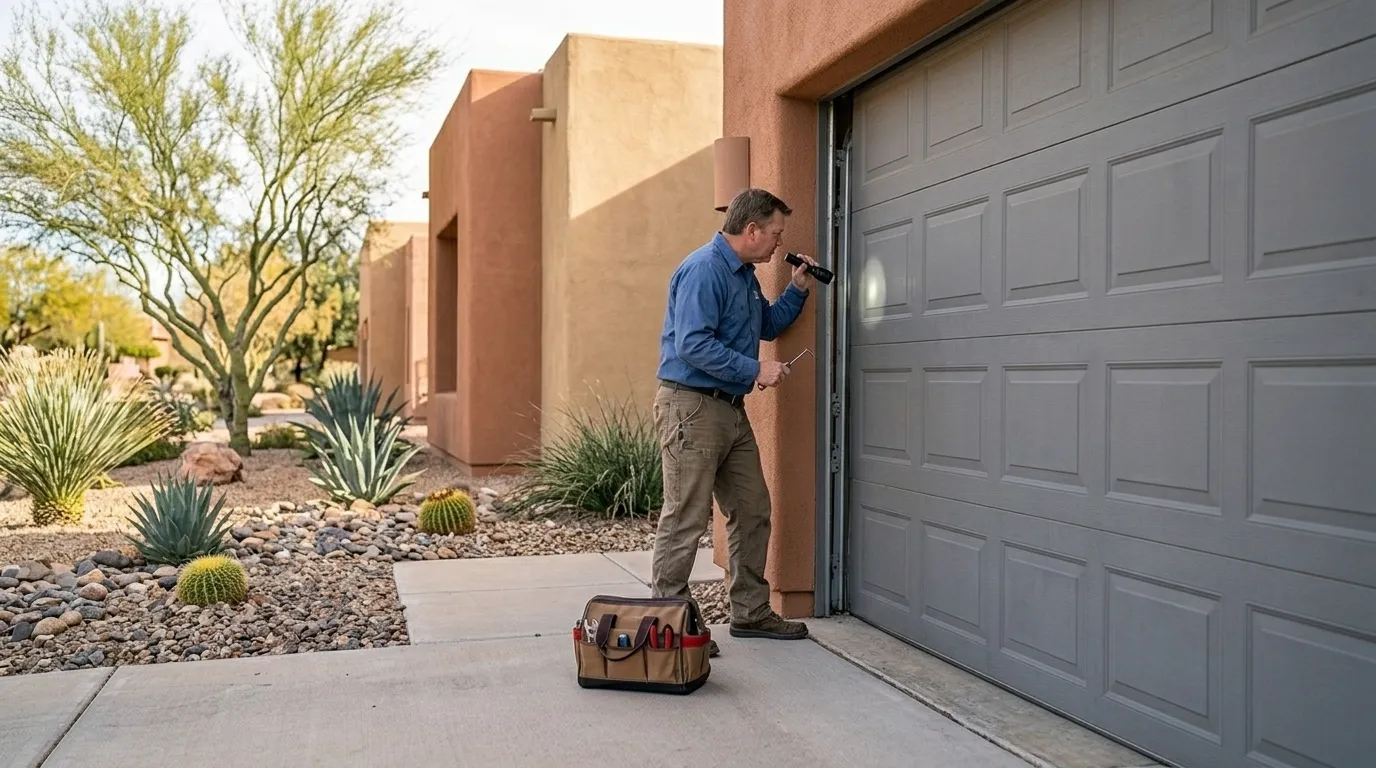
You can replace a roller yourself if you're comfortable with the door fully open and blocked, and if you're only touching the bottom two rollers on each side - the ones you can reach without the door coming down on your hands. Loosen the roller bracket, slide the old roller out of the track, drop in the new one, done. Where people get hurt is the top rollers near the spring side, or trying to pull a bent track back into shape while the door is under tension from the springs.
If your track is bent, not just the roller worn, that's not a DIY fix - a bent track needs to come off the wall and get reset or replaced, and that's spring-adjacent work. If you're not sure whether it's the roller or the track, that uncertainty alone is a good reason to have someone look at it before you take anything apart.
What Is on the Truck
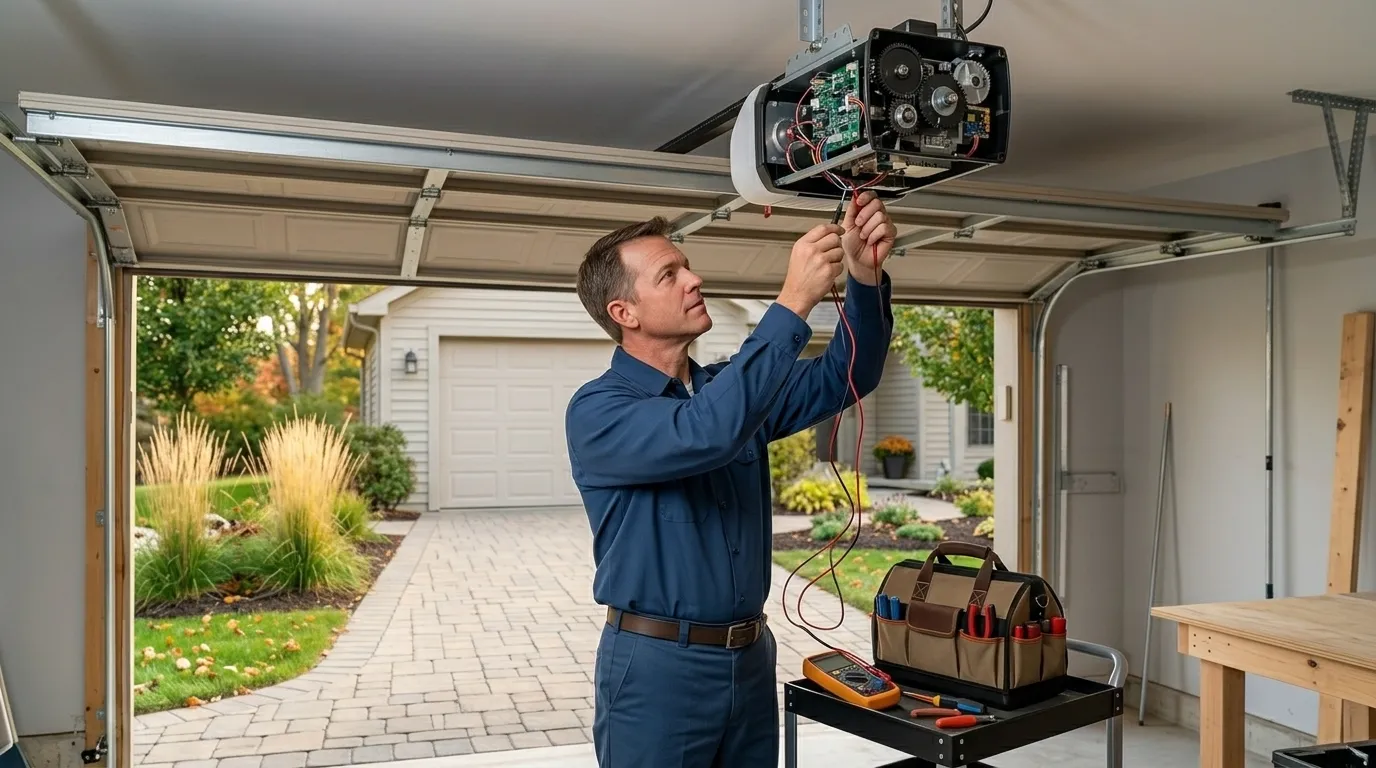
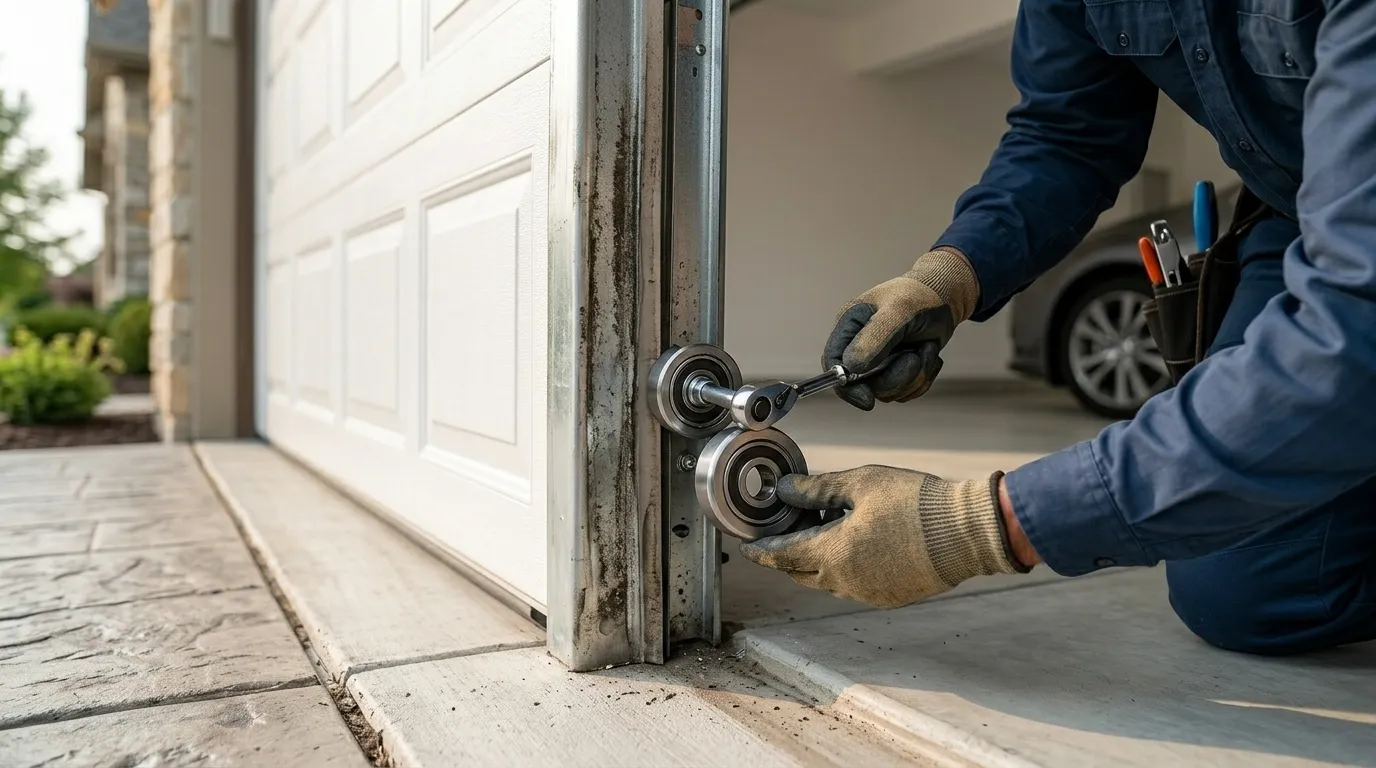
For a roller job we carry both nylon and steel roller options, since older steel-track setups common in houses built through the 1980s and 90s sometimes need a like-for-like steel roller rather than a nylon upgrade, depending on the track gauge. We stock rollers with sealed bearings as the standard swap now, because they hold up better under repeated heat cycling than the open bearings that shipped with a lot of original hardware.
We also bring track hardware - brackets, fasteners - since a worn roller often means the bracket has some slop too, and replacing one without checking the other is a callback waiting to happen. What we don't carry on a roller call is spring stock for every spring size on the market; if the job turns into a spring replacement once we're in the track, that may mean a second visit depending on what's needed.
How We Fix It
We start by running the door by hand with power to the opener disconnected, listening for where in the travel it grinds or catches. That tells us which rollers are bad and whether the track itself has drifted out of plumb. We pull the bad rollers, check the bracket bolts for the stripped-out drywall or loose lag screws that show up in older track mounts, and set new rollers with fresh lubricant.
Then we run the door again, both by hand and on the opener, checking that it travels straight and quiet the whole distance. With around 486 households in this immediate area, we don't have a fixed schedule tied to China Grove specifically - every call here starts with a drive from San Antonio, so we plan the visit to cover roller work start to finish rather than needing to come back for a part.
Talk to a China Grove Technician First
Describe what the door is doing and get a straight answer on what it likely needs.
Other Garage Door Services in China Grove
Recent Work in China Grove
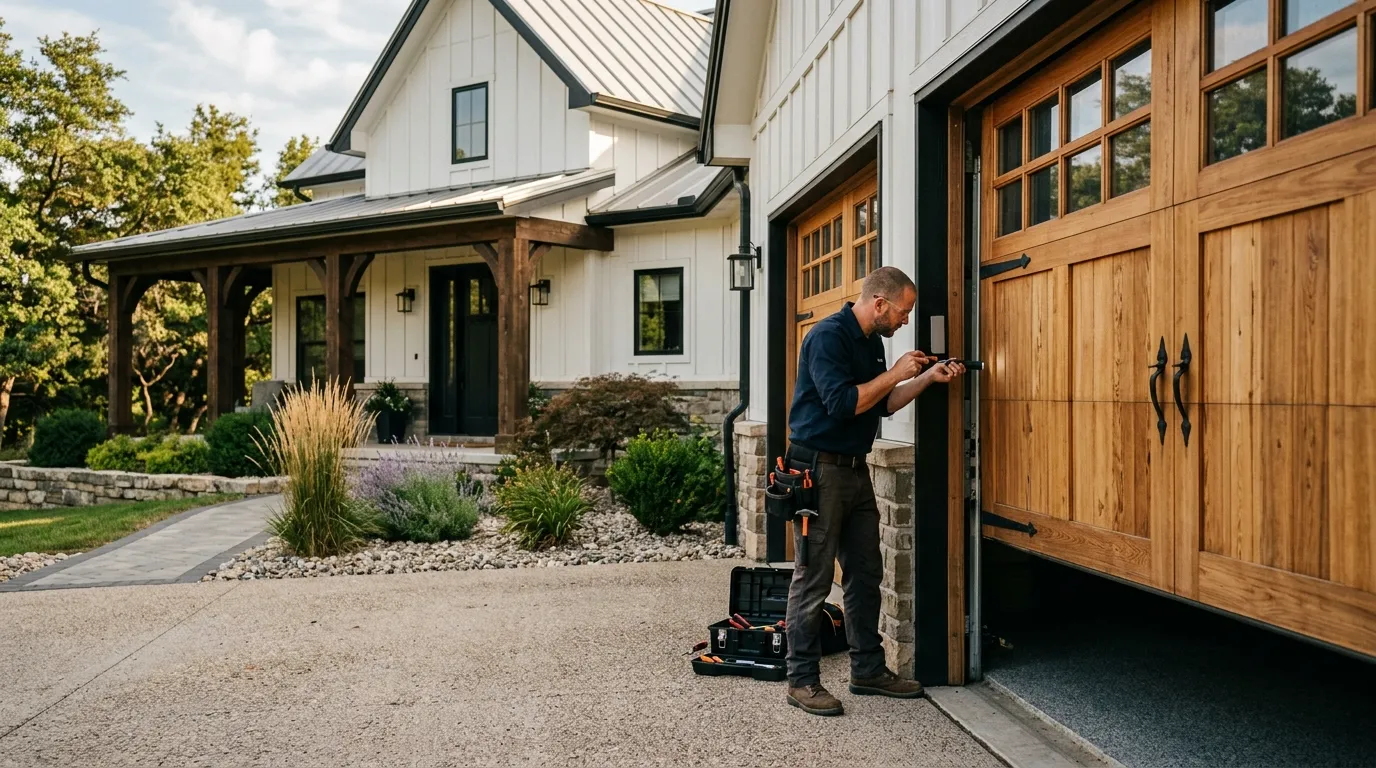
A look at jobs our crew has been on nearby.


Why China Grove Calls Us
Frequently Asked Questions
How do I know if it's the rollers and not the springs?
Rollers show up as noise - grinding, squeaking, or a rough ride at a specific point in the door's travel. Springs show up as effort: the door feels heavy, won't stay open on its own, or the opener strains and reverses. If the door sounds bad but still moves with normal effort, it's usually rollers, not springs.
Do you carry China Grove-specific parts on the truck?
We carry both steel and nylon rollers with sealed bearings, plus track hardware, on every roller call, because the mixed housing stock in this area from the 1950s through 2000s means we don't know the exact track gauge until we're on site.
Can I just replace one roller instead of all of them?
Yes, if only one or two are worn you don't need to replace the full set. We check all of them while we're there and only swap what's actually bad - no reason to charge for rollers that still have life in them.
Why does roller wear seem faster out here than people expect?
Severe summer heat cycles the steel in the track and the roller stem lubricant faster than milder climates do. Combined with original 1980s-era steel rollers on a lot of the housing stock here, that wear shows up sooner than a newer nylon-roller door would.
Need Roller Replacement in China Grove?
Call now for straight answers on cost and timing.